Air Source vs Ground Source Heat Pumps: Which Is Best for UK Homes?
If you’re considering making the switch to a heat pump, one of the first decisions you’ll need to make is which type is right for your home.
The two main options are:
- Air source heat pump
- Ground source heat pump
While they both do the same job, heating your home using outside energy rather than burning fuel, how they go about it (and what they cost) is quite different.
If you’re still getting to grips with the basics, it’s worth starting with our complete guide to heat pumps in the UK. Otherwise, let’s dive into the key differences between air source and ground source heat pumps.
What’s the Difference Between Air Source and Ground Source Heat Pumps?
Both systems work on the same principle: they extract heat from the environment and use it to warm your home. The difference is where that heat comes from.
- Air source heat pumps draw heat from the outside air, even when it’s cold, and use it to heat your home and hot water.
- Ground source heat pumps draw heat from underground pipes buried in your garden, tapping into the more stable temperature of the earth a metre or so below the surface.
In practice, this difference in heat source has a knock-on effect on installation, running efficiency, cost, and how much outdoor space you need.
How Do Air Source Heat Pumps Work?
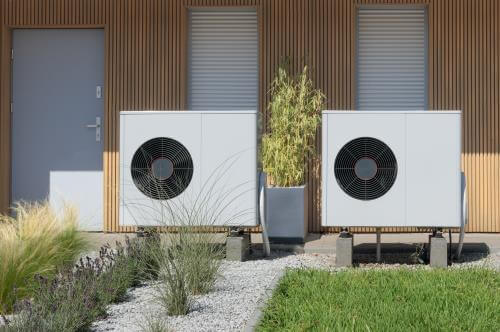
An air source heat pump sits outside your home, similar in size and appearance to an air conditioning unit. It pulls in outside air and uses a refrigerant cycle to extract the heat energy, even on cold winter days, before transferring it indoors to warm your radiators, underfloor heating or hot water cylinder.
They’re by far the most common type of heat pump installed in the UK, largely because they:
- Don’t require any excavation or groundworks
- Can be fitted to most homes with a small amount of outside space
- Are typically quicker to install than ground source systems
How Do Ground Source Heat Pumps Work?
A ground source heat pump uses a network of pipes, known as a ground loop, buried in your garden. These pipes circulate a mixture of water and antifreeze, which absorbs heat from the ground before passing it through a heat exchanger and into your heating system.
Because underground temperatures stay fairly constant year-round, ground source systems can run efficiently even in the depths of winter. However, installation requires significant garden space and groundworks, either a horizontal trench or a vertical borehole, which adds considerably to both the cost and the disruption.
Which Is More Efficient?
Ground source heat pumps generally have the edge on efficiency. Because the ground stays warmer than the winter air, they don’t have to work as hard to extract usable heat, which typically means a higher coefficient of performance (COP), the ratio of heat output to electricity used.
That said, modern air source heat pumps have closed the gap significantly in recent years, and they’re much more practical when it comes to space and installation. For most well-insulated UK homes, a properly sized and installed air source heat pump will still deliver strong efficiency and noticeably lower running costs than a gas boiler.
How Much Do They Cost to Install?
This is usually where the decision gets made. Ground source heat pumps cost considerably more to install than air source systems, largely because of the groundworks involved.
Heat pumps can cost anywhere from £8000 to £14,000 for an air source heat pump, or £15,000 to £30,000 for a ground source heat pump. For a detailed cost breakdown by property size, take a look at our guide on how much heat pumps cost. As a general rule of thumb, though:
- Air source heat pumps are the more affordable option upfront, with lower installation costs and less disruption
- Ground source heat pumps cost significantly more to install, though running costs can be marginally lower over time
- Both are eligible for the same government support through the Boiler Upgrade Scheme, so the grant doesn’t tip the balance either way
Which Is Best for UK Homes Right Now?
For the vast majority of UK homeowners, air source heat pumps are currently the more practical choice. They’re more affordable to install, don’t require you to dig up your garden, and suit the smaller plots typical of many UK properties, including terraces, semis and homes with modest outdoor space.
Ground source heat pumps still have their place though. If you have a larger garden, are building new, or are planning major groundworks anyway, the higher upfront cost may be worth it for the efficiency gains and longer system lifespan. But for most homeowners looking to replace a gas or oil boiler without major disruption, we recommend an air source heat pump.
Air Source vs Ground Source: Quick Comparison
- Space needed: Air source needs minimal outdoor space; ground source needs a large garden or borehole access
- Installation cost: Air source is significantly cheaper to install
- Installation time: Air source is quicker, typically a few days; ground source can take considerably longer
- Efficiency: Ground source is marginally more efficient, but modern air source systems perform well
- Disruption: Air source causes minimal disruption; ground source involves excavation or drilling
- Grant eligibility: Both qualify for the same Boiler Upgrade Scheme support
Still Not Sure Which Heat Pump is Right for You?
Every property is different, and the right choice depends on your home’s size, insulation, garden space and heating needs. Our team can talk you through your options and recommend the system that makes sense for your home and budget. Get in touch to arrange a no-obligation heat pump installation assessment.